

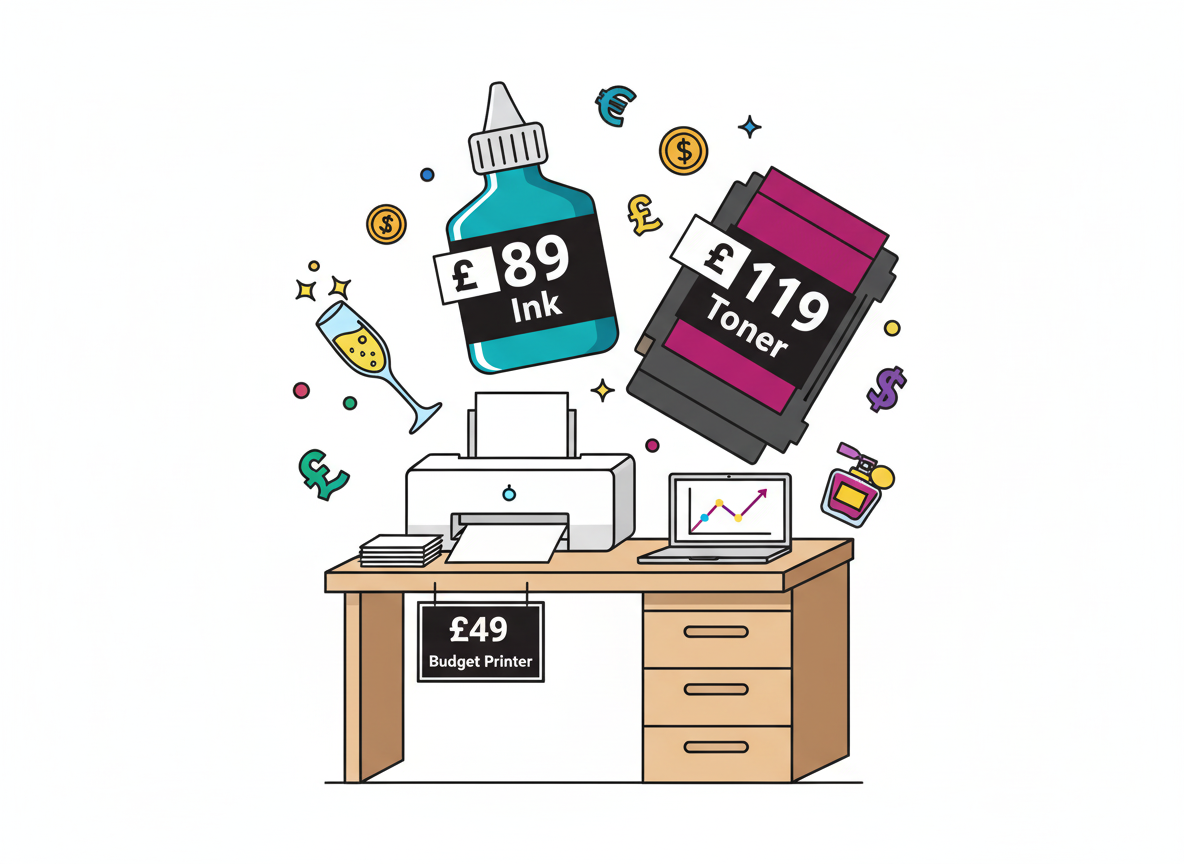
If you have ever bought a printer for your home or office, you know the scenario. You find a device for £49. It seems like a bargain. You take it home, set it up, and then, a few weeks later, you need to replace the ink cartridges. The cost? £60. You have just paid more for the consumables than you paid for the printer itself.
This is not an accident. It is a deliberate business model that has shaped the printing industry for decades. The hardware is sold at a razor-thin margin, sometimes even at a loss, because the real profit lies in the ongoing sale of ink and toner. For businesses, this model can create a hidden cost trap that silently drains budgets for years.
Understanding the truth about ink and toner costs is essential for any business that relies on printing. Armed with the right knowledge, you can make smarter purchasing decisions, choose the right equipment, and dramatically reduce your ongoing printing expenses.
Based on industry analysis and procurement best practices, here is everything you need to know about ink and toner costs.
Part 1: Ink vs. Toner, Understanding the Difference
Before diving into costs, it is important to understand the fundamental difference between ink and toner. They are not interchangeable, and the choice between them has significant implications for your operating costs.
- Ink:
Ink is a liquid pigment suspended in a solvent. It is used in inkjet printers. The print head sprays microscopic droplets of ink onto the paper through tiny nozzles.- Pros: Excellent photo quality, lower upfront hardware cost.
- Cons: Higher cost per page, cartridges dry out if not used regularly, slower print speeds, less durable for high-volume printing.
- Toner:
Toner is a fine powder made of plastic particles and pigment. It is used in laser printers and copiers. The printer uses static electricity to adhere the toner to the paper, then fuses it with heat.- Pros: Lower cost per page, faster print speeds, more durable output, cartridges do not dry out, ideal for high-volume printing.
- Cons: Higher upfront hardware cost, larger physical footprint.
- The Business Implication:
For office environments with moderate to high print volumes, laser printers and copiers using toner are almost always more cost-effective than inkjet printers. The lower cost per page and reduced maintenance requirements outweigh the higher upfront hardware cost. The “cheap” inkjet printer at the office supply store is often the most expensive printing option over a three-year period.
Part 2: The Razor-and-Blade Business Model
The printer industry operates on a model familiar to anyone who has bought a razor: sell the handle at a low price, and make the profit on the blades.
- How It Works:
Printer manufacturers invest heavily in research and development, manufacturing, and marketing. To make printers affordable and accessible, they price the hardware competitively, sometimes below cost. They then recoup their investment, and generate profit, through the sale of proprietary ink and toner cartridges. - The Lock-In Effect:
Most printers are designed to work only with cartridges from the manufacturer. Chips embedded in the cartridges communicate with the printer, and using third-party cartridges can trigger error messages, void warranties, or simply not work. - Why This Matters for Businesses:
The upfront price of a printer tells you almost nothing about its long-term cost. A £50 inkjet printer may cost you £200 per year in ink. A £400 laser printer may cost you £50 per year in toner. Over three years, the “expensive” printer is actually significantly cheaper.
Part 3: The True Cost of Ink
Let us put some numbers on ink costs. They are often shocking when viewed on a per-litre basis.
- The Per-Litre Comparison:
- A standard ink cartridge for a desktop inkjet printer contains about 10–15 millilitres of ink and costs £15–£25.
- That works out to approximately £1,500–£2,500 per litre.
- By comparison, a bottle of vintage Champagne costs around £40 per litre. High-end perfume costs around £300 per litre. Printer ink is often more expensive than both.
- Cost Per Page:
A more practical measure is cost per page. For a typical inkjet printer:- Black and white: 5–10 pence per page
- Colour: 10–20 pence per page
For a typical office laser printer or copier:
-
- Black and white: 1–3 pence per page
- Colour: 5–10 pence per page
- The Business Impact:
A business printing 2,000 pages per month (1,500 black and white, 500 colour) would spend approximately:- With inkjet: £150–£250 per month
- With laser: £30–£50 per month
- Annual difference: £1,440–£2,400
Part 4: The Truth About Toner Costs
Toner is significantly more economical than ink, but there are still important nuances that affect the true cost.
- Standard vs. High-Yield Cartridges:
Most toner cartridges come in two versions: standard yield and high yield (sometimes called “XL” or “extra high”). High-yield cartridges have a higher upfront cost but a significantly lower cost per page.- Example: A standard cartridge might cost £50 and print 2,000 pages (2.5p per page). A high-yield cartridge might cost £80 and print 5,000 pages (1.6p per page). The high-yield cartridge saves 0.9p per page, or £45 for every 5,000 pages.
- Strategy: Always calculate cost per page when choosing cartridges. High-yield is almost always cheaper in the long run.
- OEM vs. Compatible (Third-Party) Toner:
Original Equipment Manufacturer (OEM) cartridges are made by the printer manufacturer. Compatible or remanufactured cartridges are made by third parties.- OEM: Guaranteed quality, full warranty protection, highest cost per page.
- Compatible: Lower upfront cost, variable quality, potential warranty implications.
- The Risk: Poor-quality compatible cartridges can leak, damage printer components, or produce substandard output. A single failed cartridge that damages your printer can wipe out years of savings.
- What Other Businesses Do:
They weigh the risk. For critical business printers where reliability matters, they stick with OEM high-yield cartridges. For less critical devices or high-volume environments where margins are tight, they source compatible cartridges from reputable remanufacturers with quality guarantees.
Part 5: The Hidden Costs of Ink and Toner
The purchase price of cartridges is only part of the story. There are hidden costs that significantly increase the total cost of printing.
- Waste from Drying Out:
Inkjet cartridges dry out if the printer is not used regularly. If your office prints intermittently, you may find that a cartridge has dried up before it is empty. That is pure waste. - Waste from Partial Use:
Many printers report cartridges as “empty” while a significant amount of ink or toner remains. This is a deliberate design feature in some devices to ensure print quality, but it means you are throwing away usable product. - Cleaning Cycles:
Inkjet printers regularly perform cleaning cycles that use ink to flush the print head nozzles. These cycles consume ink even when you are not printing. A printer left idle for a week may consume several pages worth of ink just in cleaning. - Test Pages and Calibration:
Laser printers and copiers occasionally run calibration cycles that consume toner. These are necessary for maintaining quality but add to the total cost. - Storage and Handling:
Toner cartridges have a shelf life. If you bulk-buy to save money, old cartridges may degrade before they are used, leading to poor print quality or waste.
Part 6: How to Reduce Ink and Toner Costs
Armed with the truth about ink and toner costs, you can take practical steps to reduce your printing expenses.
- Right-Size Your Equipment
If your business prints more than 500 pages per month, a laser printer or copier will almost always be cheaper than an inkjet. The upfront investment pays back quickly in lower consumables costs. - Use High-Yield Cartridges
Always calculate cost per page. High-yield cartridges almost always offer a lower cost per page than standard-yield. Over a year, the savings can be substantial. - Set Duplex as Default
Printing on both sides of the page cuts paper consumption by up to 50%. Paper is not ink or toner, but it is a related cost, and less paper means less cost. - Print in Draft Mode
For internal documents, drafts, and reference materials, use the printer’s “draft” or “economy” mode. This uses significantly less toner or ink while remaining perfectly readable. - Print Only What You Need
Before printing, ask: does this need to be printed? Can it be shared digitally? Every page not printed is 100% saved. - Match Paper to Printer
Using the wrong paper can increase toner consumption. For laser printers, use paper designed for laser printers. Cheap, absorbent paper may require more toner to achieve acceptable density. - Consider a Managed Print Service (MPS)
Under MPS, you pay a predictable cost per page. The provider has an incentive to optimise your printing environment, including using high-yield cartridges, setting duplex defaults, and reducing waste, because their profitability depends on managing your overall consumption. - Maintain Your Printer
A well-maintained printer uses toner more efficiently. Clean rollers, calibrated fusers, and properly seated cartridges reduce waste from reprints and poor-quality output.
Part 7: The Rise of High-Capacity Tank Systems
In recent years, a new category of printer has emerged that challenges the traditional razor-and-blade model: high-capacity tank systems.
- How They Work:
Instead of cartridges, these printers (from Epson, Brother, Canon, and others) use refillable ink tanks. You purchase bottles of ink and pour them directly into the printer. The upfront cost is higher than a standard inkjet, but the cost per page is dramatically lower, approaching that of laser printers. - Cost Comparison:
- Standard inkjet: 5–10p per page (black)
- Tank system: 0.5–1p per page (black)
- Laser: 1–3p per page (black)
- Considerations:
Tank systems are an excellent option for small businesses with moderate colour printing needs. They offer the print quality of inkjet with running costs closer to laser. However, they still have the speed limitations of inkjet technology and may not be suitable for high-volume environments.
Part 8: What to Ask Before You Buy
When evaluating new printing equipment, asking the right questions upfront prevents unpleasant surprises later.
- “What is the cost per page for black and white and colour?”
Ask for this in writing. Compare across models and brands. This single number tells you more about long-term cost than any other metric. - “What is the yield of the included starter cartridges?”
Many printers ship with “starter” cartridges that have significantly lower yield than retail cartridges. You may need to replace them within weeks of purchase. Factor this into your total cost. - “Does this printer require branded cartridges?”
Some printers are designed to work only with OEM cartridges. If you plan to use compatible cartridges, ensure the printer will accept them without triggering errors. - “What is the cost of high-yield cartridges versus standard?”
If the manufacturer offers high-yield cartridges, calculate the cost per page for both. The high-yield option is almost always cheaper per page. - “Is there a managed print service option?”
For larger devices or fleet purchases, ask about MPS. The per-page rate may be competitive with, or even lower than, buying cartridges individually, with the added benefit of predictable budgeting.
Part 9: The Environmental Truth
Ink and toner costs are not just financial; they have an environmental dimension that responsible businesses should consider.
- Plastic Waste:
Each cartridge represents a significant amount of plastic. Globally, hundreds of millions of cartridges end up in landfills each year. Many are not biodegradable. - Recycling Programs:
Most major manufacturers offer free cartridge recycling programs. Used cartridges are remanufactured or disassembled for materials. Some office supply retailers also accept cartridges for recycling. - Remanufactured Cartridges:
Remanufactured cartridges are used OEM cartridges that have been cleaned, refilled, and tested. They offer a lower environmental footprint than new cartridges and often a lower cost. Quality varies by remanufacturer, so choose reputable suppliers. - Tank Systems:
Tank systems generate significantly less plastic waste because you buy ink in bottles rather than disposable cartridges. For businesses prioritising sustainability, this is a meaningful consideration.
The Bottom Line
The truth about ink and toner costs is simple: what you pay upfront for a printer tells you almost nothing about what it will cost to run. The real expense is in the consumables, and the razor-and-blade business model ensures that ongoing costs are where manufacturers make their profit.
For businesses, the path to lower printing costs lies in understanding cost per page, choosing the right technology for your volume (laser over inkjet for most offices), using high-yield cartridges, and adopting practices that reduce waste. For larger organisations or those seeking predictability, Managed Print Services offer a way to shift from unpredictable supply costs to a stable, per-page operational expense.
The most expensive printer is not the one with the highest price tag. It is the one that costs you a fortune in ink or toner month after month.